


Logo Design Basics: How Professional Brand Logos Are Created
A logo is often the first visual element people notice when they interact with a brand. From business websites and social media pages to packaging, advertisements and signage, a well-designed logo helps create a recognizable visual identity.
But professional logo design involves much more than choosing an attractive symbol or font. Designers need to understand the brand, target audience, industry, visual communication and practical applications before creating the final design.
For students interested in creative careers, learning these fundamentals through a Graphic Design Course in Bardhaman can provide a structured foundation for developing professional design skills.
What Is Logo Design?
Logo design is the process of creating a visual mark that represents a business, organization, product or brand.
A logo may include:
Typography
Symbols
Shapes
Icons
Illustrations
Colors
Monograms
Abstract elements
A logo should communicate something about the brand while remaining recognizable and usable across different platforms.
It is important to understand that a logo is only one part of a broader brand identity. Brand identity can also include colors, typography, imagery, packaging, marketing materials and other visual elements.
Why Is a Professional Logo Important for a Brand?
A professional logo can support a brand in several ways.
Builds Brand Recognition
A distinctive visual mark can make a business easier to recognize across different marketing channels.
Creates a Professional Impression
A thoughtfully designed logo can help establish a consistent and professional appearance.
Supports Brand Consistency
The same logo can be used across websites, social media, business cards, packaging, advertisements and other communication materials.
Communicates Brand Personality
Typography, shapes and colors can influence how people perceive a brand. For example, a minimalist design may communicate simplicity, while a bold visual style may create a more energetic impression.
Works Across Marketing Channels
A good logo should be adaptable enough to work on both digital and physical platforms.
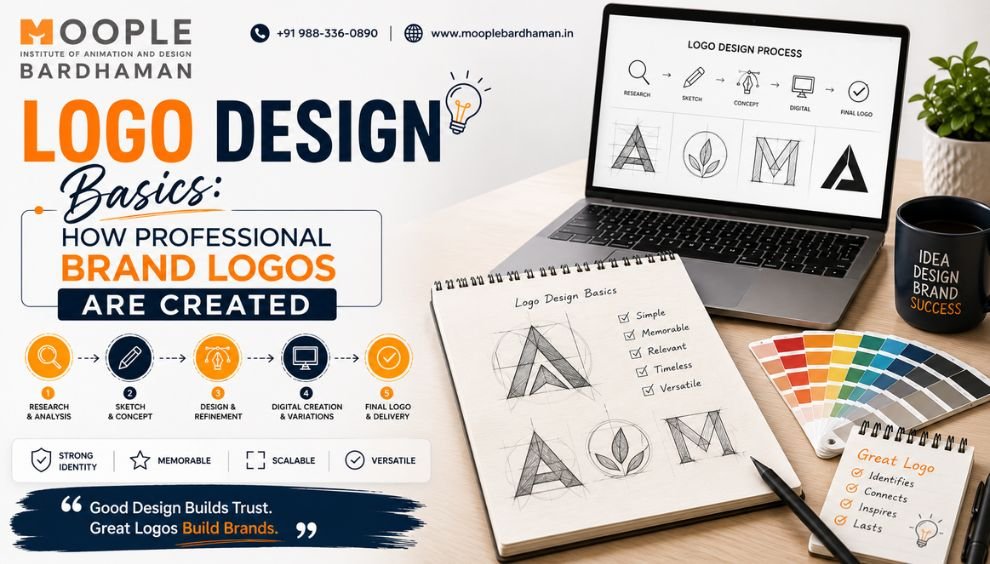
How Professional Brand Logos Are Created
Professional logo design usually follows a structured creative process rather than starting with random shapes and colors.
1. Understanding the Brand
The first step is understanding the business.
A designer may consider:
What does the business offer?
Who is the target audience?
What industry does it operate in?
What makes the brand different?
What personality should the brand communicate?
Where will the logo be used?
These questions help establish a creative direction.
2. Researching the Target Audience
A logo should be appropriate for the people the brand wants to reach.
For example, a children's education brand may require a different visual approach from a corporate financial service.
Understanding the audience helps designers make more informed decisions about:
Colors
Typography
Shapes
Style
Complexity
3. Conducting Competitor Research
Designers often examine competitors to understand the existing visual landscape.
The objective is not to copy competitors but to identify:
Common design patterns
Industry conventions
Opportunities for differentiation
Visual styles that may be overused
Good research can help a designer create something relevant while maintaining a distinctive identity.
4. Developing Creative Concepts
Once the research is complete, designers begin developing ideas.
This can involve:
Mind mapping
Sketching
Reference gathering
Word association
Shape exploration
Typography experiments
At this stage, quantity can be useful because multiple concepts allow designers to compare different creative directions.
5. Creating Initial Sketches
Before moving completely into digital software, designers may create rough sketches.
Sketching helps explore:
Shapes
Symbols
Letterforms
Layouts
Proportions
Composition
The purpose is to find a strong concept before spending time refining every detail.
6. Choosing Typography
Typography is a major part of logo design.
Designers need to consider:
Font style
Letter spacing
Weight
Readability
Character
Proportion
A font should support the personality of the brand rather than simply looking attractive on its own.
7. Selecting Colors
Color can influence visual perception and brand recognition.
Designers consider:
Brand personality
Industry context
Target audience
Contrast
Digital and print applications
Accessibility and readability
A professional logo does not necessarily need many colors. In many cases, a controlled color palette can create a cleaner and more versatile identity.
8. Creating the Logo Digitally
Once a concept is selected, the designer develops it using professional graphic design software.
Vector-based tools are particularly useful for creating logos because vector artwork can be resized while maintaining clean edges.
Commonly used tools include:
Adobe Illustrator
CorelDRAW
Adobe Photoshop for specific supporting tasks and presentation work
The exact software workflow depends on the designer, project requirements and type of artwork.
9. Testing Different Versions
A logo should be tested in different situations.
Designers may create:
Full-color version
Black-and-white version
Horizontal version
Vertical or stacked version
Icon-only version
Small-size version
Testing helps identify whether the design remains recognizable and readable in different applications.
10. Refining the Final Design
The refinement stage focuses on details such as:
Alignment
Spacing
Proportions
Typography
Shapes
Color balance
Visual consistency
Small adjustments can significantly improve the overall appearance of a logo.
11. Preparing Final Files
A professional logo may need to be delivered in different formats depending on where it will be used.
Common formats include:
AI
EPS
SVG
PNG
JPG
Vector formats are especially useful when the logo needs to be reproduced at different sizes.
Important Principles of Professional Logo Design
Simplicity
A simple logo is generally easier to recognize and reproduce.
Memorability
A distinctive visual concept can help people remember the brand.
Relevance
The design should make sense for the brand, audience and industry.
Scalability
The logo should remain usable from a small social media icon to a large signboard.
Versatility
A strong logo should work across different backgrounds, formats and marketing materials.
Balance
Shapes, typography and spacing should create a visually stable composition.
Appropriate Typography
The typeface should support the brand personality while remaining readable.
Consistent Color Use
Colors should have a clear purpose instead of being added simply to make the design look more decorative.
Role of Graphic Design Software in Logo Creation
Professional designers use different software depending on the project.
Adobe Illustrator
Illustrator is widely used for vector artwork, making it suitable for creating scalable logos, icons and illustrations.
CorelDRAW
CorelDRAW provides tools for vector-based graphic design and is commonly used for various professional design and print workflows.
Adobe Photoshop
Photoshop is primarily raster-based and can be useful for logo presentations, mockups, image editing and supporting creative work.
Learning software is important, but software knowledge alone does not make someone a professional logo designer. Understanding design principles, visual communication and creative problem-solving is equally important.
Skills Students Need to Learn Logo Design
Aspiring designers can benefit from developing:
Graphic design fundamentals
Typography
Color theory
Composition
Vector design
Creative thinking
Visual communication
Research skills
Presentation skills
Client communication
Attention to detail
A structured Graphic Design Course in Bardhaman can help learners develop these skills through guided learning and practical design exercises.
Common Logo Design Mistakes Beginners Should Avoid
Beginners often make mistakes while trying to make a logo look more impressive.
Using Too Many Colors
Too many colors can make a logo visually complicated and difficult to reproduce.
Overcomplicating the Design
A logo does not need numerous shapes, effects or decorative elements to look professional.
Choosing Typography Without Purpose
An attractive font may still be unsuitable if it does not match the brand's personality or readability requirements.
Following Trends Blindly
Design trends change. A logo should have a strong concept rather than depending entirely on temporary visual trends.
Copying Existing Designs
Professional designers should create original concepts and avoid copying other brands.
Ignoring Small-Size Applications
A design that looks good on a large screen may become unclear when reduced to a small icon.
Designing Without Research
Without understanding the brand and audience, even an attractive logo may fail to communicate the intended message.
How a Graphic Design Course Can Help You Learn Logo Design
Learning logo design systematically can help students move from basic concepts to practical design projects.
A suitable course may introduce learners to:
Design fundamentals
Typography
Color theory
Professional design software
Branding concepts
Logo development
Creative workflows
Portfolio projects
Visual communication
For students in the region, Moople Bardhaman offers a creative learning environment where graphic design can be explored alongside other areas such as animation, motion graphics and digital media.
Students should evaluate the current curriculum, practical training, faculty, software exposure and portfolio opportunities before choosing a program.
How to Build a Logo Design Portfolio
A portfolio is an important part of preparing for a creative career.
Beginners can create projects such as:
Restaurant logo
Fashion brand identity
Educational institute logo
Technology startup logo
Local business branding
Product logo
Personal brand identity
Each project should explain the creative thinking behind the design rather than simply displaying the final logo.
A strong portfolio can demonstrate your ability to research, develop concepts, select typography and colors, and present a finished visual identity.
Shape Your Creative Future
Professional logo design combines research, creativity, typography, color, composition and technical skills. A successful logo is not simply an attractive graphic; it is a visual representation of a brand that needs to work across different sizes and applications.
For aspiring designers, developing strong fundamentals and practicing through real-world-style projects can provide a valuable foundation. A Graphic Design Course in Bardhaman can be one route for students who want structured learning and practical exposure.
For learners interested in developing broader creative skills, Moople Bardhaman can be explored as a local option for graphic design and related creative disciplines.
The key is to keep learning, experiment with different design approaches and build a portfolio that demonstrates your ability to solve visual communication problems—not just create attractive graphics.
Frequently Asked Questions
1. What makes a logo professional?
A professional logo is generally simple, relevant, recognizable, versatile and suitable for the brand's target audience and applications.
2. Which software is commonly used for logo design?
Adobe Illustrator and CorelDRAW are commonly used for vector-based logo creation. Photoshop can also support presentation and image-editing tasks.
3. Can beginners learn professional logo design?
Yes. Beginners can develop logo design skills by learning design fundamentals, practicing regularly and completing structured projects.
4. Do graphic designers need to learn typography and color theory?
Yes. Typography and color theory are important because they influence readability, visual hierarchy and the overall personality of a brand.
5. Is a portfolio important for a graphic designer?
Yes. A portfolio provides practical evidence of a designer's skills and creative approach and can be useful when applying for jobs, internships or freelance projects.
6. Can logo design be a career?
Logo design can be part of a broader graphic design career. Designers may work on branding, advertising, social media creatives, packaging, digital content and other visual communication projects.