



Graphic Design Learning Roadmap: What to Master From Basics to Advanced Design
Graphic design is more than creating attractive images. It combines creativity, visual communication, technology and problem-solving. A designer needs to understand typography, colour, composition, layout and the purpose behind every visual element. Software knowledge is important, but it is only one part of becoming a capable designer.
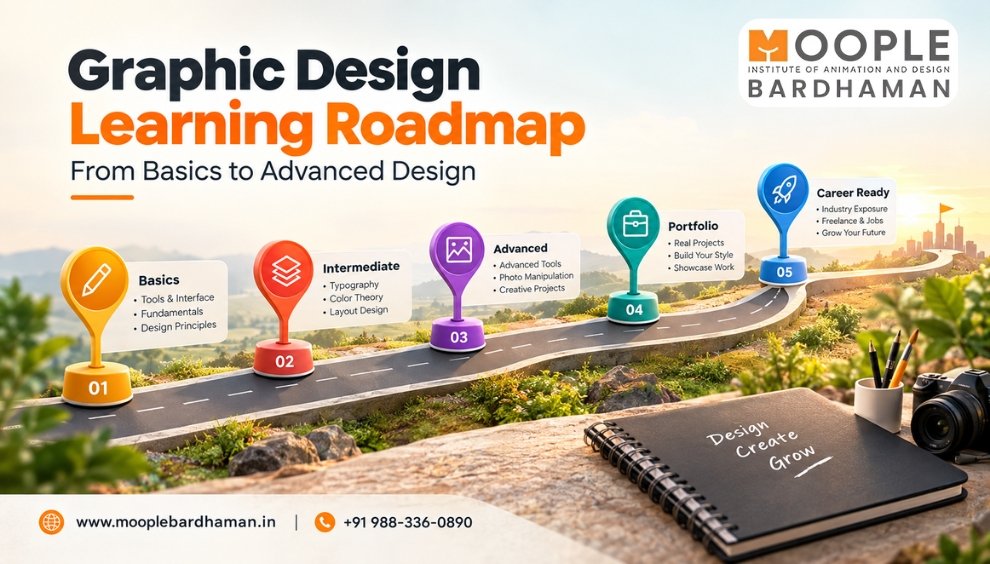
A Graphic Design Learning Roadmap provides a step-by-step path for developing these abilities. It explains what beginners should learn first, which tools they can practise, when they can move towards advanced concepts and how to apply their knowledge through practical projects. For learners exploring a Graphic Design Course in Bardhaman, having this kind of structured approach can make the learning journey clearer.
1. Build a Strong Foundation in Design
The first stage of a Graphic Design Learning Roadmap should focus on fundamental design principles. Before concentrating heavily on software, learners need to understand how visual elements work together.
Key areas include:
- Colour theory
- Typography
- Composition
- Alignment
- Contrast
- Balance
- Spacing
- Visual hierarchy
For example, choosing a typeface is not simply about selecting a font that looks attractive. It should match the purpose of the design and remain easy to read. Similarly, colours should support the message and create a clear relationship between different elements.
A strong understanding of these principles makes it easier to create purposeful designs later.
2. Learn the Right Design Software
Once the fundamentals are clear, learners can begin working with professional design software. Different tools have different purposes, so they should be learned according to the type of work a designer wants to create.
Adobe Photoshop is commonly used for photo editing, image manipulation and digital compositions. Adobe Illustrator is useful for vector graphics, logos, icons and illustrations. CorelDRAW can be valuable for vector and print-oriented work, while Adobe InDesign is generally used for brochures, catalogues, magazines and other multi-page designs.
Learners interested in digital interface design can also explore Figma.
A good Graphic Design Course in Bardhaman should ideally connect software learning with practical design assignments. Simply knowing where different tools are located is not enough; learners need to understand how and when to use them.
3. Start Creating Simple Design Projects
The next stage is to apply the concepts through practical work. Beginners can start with posters, flyers, social media posts, banners, thumbnails and promotional creatives.
Every project should have a clear purpose. Learners should ask:
- Who is the target audience?
- What is the main message?
- Which information deserves the most attention?
- Are the colours and typography appropriate?
- Is the design easy to understand?
This approach helps turn theoretical knowledge into practical graphic design skills. It also teaches learners to make decisions based on communication rather than simply trying to make a design look decorative.
4. Develop Branding and Visual Identity Skills
After becoming comfortable with basic projects, learners can move into branding. This introduces a more strategic side of graphic design.
A branding project may involve creating a logo, colour palette, typography system, business card, social media templates and other brand materials.
The objective is to make different pieces of communication feel connected. A designer must understand how visual elements work together to represent a business consistently.
For someone comparing the Best Graphic Design Course Institutes in Bardhaman, branding and identity projects can be an important part of the curriculum to consider. They give learners an opportunity to practise design beyond individual posters or social media graphics.
5. Understand Digital and Print Design
Professional designers may work across both digital and physical media. Learning the differences between these formats is therefore an important part of the roadmap.
Digital projects can include social media creatives, website banners, online advertisements and email graphics. Print projects may include brochures, posters, packaging, flyers and business materials.
Learners should understand dimensions, resolution, file formats, readability and other production requirements. These practical details become particularly important when moving from classroom exercises to real client work.
6. Progress Towards Advanced Design
After gaining experience with standard projects, learners can gradually take on more complex assignments. Advanced areas may include detailed image manipulation, illustration, advertising campaigns, packaging, publication design and motion graphics fundamentals.
At this stage, technical ability is only one part of the process. Designers also need to understand the objective, audience and communication strategy behind a project.
Someone searching for the Best Graphic Design Course in Burdwan should therefore look beyond the list of software offered. A useful programme should provide opportunities to apply those tools to increasingly complex design problems.
7. Learn How AI Fits Into Modern Design
AI is becoming part of many creative workflows. Designers can use AI tools to explore ideas, develop concepts, edit images, generate variations and speed up certain repetitive tasks.
However, AI should support design thinking rather than replace it. A designer still needs to evaluate typography, composition, colour, originality and visual quality.
For modern learners, combining traditional graphic design skills with appropriate AI tools can provide a broader understanding of contemporary design workflows.
8. Work on Realistic Design Briefs
A major step towards professional design is learning to work from a brief. Instead of creating graphics only to practise software, learners can work on projects with a specific business, audience, message and objective.
For example, a project could involve creating a complete identity for a fictional business, developing a promotional campaign or designing a series of social media advertisements.
This type of practice develops creative problem-solving and helps learners understand how professional design decisions are made.
9. Build a Professional Portfolio
A portfolio demonstrates what a designer can actually create. It is therefore an important outcome of a Graphic Design Learning Roadmap.
Beginners do not need hundreds of projects. A carefully selected collection of strong work can be more effective when it demonstrates different abilities.
A portfolio can include branding, advertising, social media, print and digital projects. Where appropriate, showing the initial concept, development and final design can also demonstrate the thinking behind the work.
For learners evaluating the Best Graphic Design Course Institutes in Bardhaman, portfolio development is another factor worth considering because practical work provides evidence of progress.
10. Continue Improving After the Course
Graphic design continues to change as software, platforms and technologies develop. Completing a course should therefore be considered the beginning of continued professional development rather than the end of learning.
Designers can improve by practising regularly, studying professional work, experimenting with new techniques and updating their portfolios.
For learners considering a Graphic Design Course in Bardhaman, a structured learning environment can provide a starting point for developing these skills. Moople Bardhaman offers graphic design education alongside animation, VFX, web design, UI/UX and digital marketing.
From Beginner Skills to Professional Design
The progression from beginner to professional designer does not happen overnight. A practical roadmap can take learners from design fundamentals and software knowledge to basic projects, branding, digital and print design, advanced techniques, AI-assisted workflows and portfolio development.
When choosing a Graphic Design Course in Burdwan, learners should focus on what they will actually learn and practise rather than selecting a programme based only on its promotional claims.
With consistent practice, constructive feedback and meaningful projects, learners can gradually develop the creative and technical abilities needed for opportunities in branding, advertising, digital media and other design-related fields.
FAQs
What is a Graphic Design Learning Roadmap?
A Graphic Design Learning Roadmap is a structured progression that takes a learner from basic design principles and software skills to practical projects, advanced techniques and portfolio development.
What should I learn first in graphic design?
Begin with typography, colour theory, composition, spacing, alignment, contrast and visual hierarchy. These fundamentals provide the foundation for more advanced design work.
Which software should a beginner learn?
Photoshop and Illustrator are useful starting points. Depending on career goals, learners can also explore CorelDRAW, InDesign and Figma.
Can I become a graphic designer without drawing skills?
Yes. Drawing can be useful for illustration, but professional graphic design also depends on typography, composition, visual communication, software knowledge and creative problem-solving.
When should I start building a design portfolio?
Portfolio development can begin during the learning process. Start with your strongest projects and gradually replace basic exercises with realistic, well-presented work.
Can AI tools be useful for graphic designers?
Yes. AI can support brainstorming, concept exploration, image editing and repetitive tasks. However, strong design fundamentals are still necessary to judge and refine the results.
What should I check before choosing a graphic design course in Bardhaman?
Look at the curriculum, software training, practical assignments, project work, portfolio development and teaching approach. Choose a programme that matches the type of design career you want to pursue.