
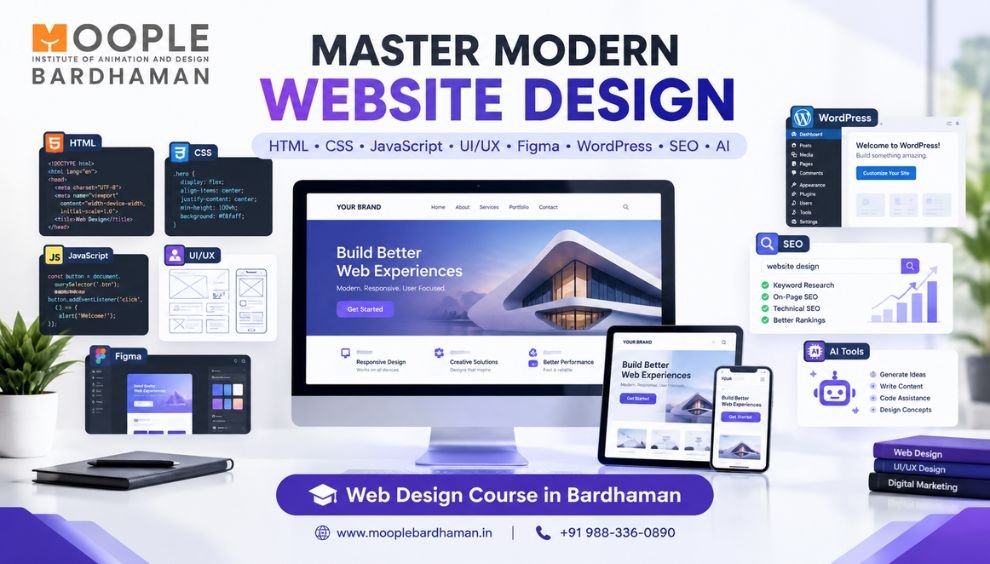



Master Modern Website Design with HTML, CSS, JavaScript, UI/UX, Figma, WordPress, SEO & AI Tools
Website design has become an important part of the digital world. A modern website needs more than an attractive appearance. It should have a clear structure, smooth navigation, responsive layouts, interactive features and a user-friendly interface. Search visibility and modern technologies such as AI are also becoming part of the website design workflow.
Whether you are a beginner, student, freelancer, working professional or simply interested in learning how websites are created, understanding the fundamentals of web design can provide a useful foundation. HTML, CSS, JavaScript, UI/UX, responsive design, Figma, WordPress, basic SEO and AI tools each have an important role in the modern website creation process.
HTML: The Foundation of Every Website
HTML, or HyperText Markup Language, provides the basic structure of a webpage. It organizes website content using elements such as headings, paragraphs, images, links, lists and forms.
HTML is generally one of the first technologies introduced in a Website Design Course because it helps learners understand how webpages are structured.
A strong understanding of HTML also makes it easier to work with CSS and JavaScript. Together, these technologies form an important foundation for creating functional and interactive websites.
CSS: Creating Attractive Website Layouts
CSS, or Cascading Style Sheets, controls the visual appearance of a webpage. It allows designers to work with typography, colours, spacing, backgrounds, borders and layouts.
Modern CSS also includes techniques such as Flexbox and Grid, which help create flexible and organized layouts.
With CSS, a basic HTML structure can be transformed into a visually consistent website. It also plays an important role in creating layouts that work properly across different screen sizes.
JavaScript: Adding Interaction and Functionality
A modern website often needs interactive elements, and JavaScript helps make this possible. It allows webpages to respond to user actions and perform tasks dynamically.
JavaScript can be used for features such as:
- Interactive buttons
- Navigation menus
- Form validation
- Image sliders
- Dynamic content
- Interactive page elements
Understanding the relationship between HTML, CSS and JavaScript makes it easier to understand how websites move from a static structure to a more functional digital experience.
UI/UX: Designing Around User Needs
Good web design is not only about visual appearance. Visitors should be able to understand a page, navigate between sections and find the information they need easily.
UI, or User Interface, focuses on the visual elements of an interface, while UX, or User Experience, considers how people interact with and experience the website.
A practical Web Design Training in Bardhaman can introduce concepts such as:
- Visual hierarchy
- Typography
- Navigation
- Page structure
- User flow
- Consistency
- Usability
- Basic accessibility
These principles help create interfaces that are both visually organized and easier to use.
Responsive Design for Different Devices
Websites are accessed from smartphones, tablets, laptops and desktop computers. Responsive design allows a website's layout and elements to adapt to different screen sizes.
Responsive websites can use flexible layouts, media queries and mobile-first approaches to maintain usability across devices.
Responsive design is therefore an essential part of modern web development. A well-designed website should provide a convenient browsing experience whether it is viewed on a large desktop screen or a smaller mobile display.
Figma: Planning Website Designs Visually
Figma is a popular interface design and prototyping tool. It can be used to plan the appearance and structure of a website before development begins.
Figma allows designers to create:
- Wireframes
- Website layouts
- UI components
- Prototypes
- Design systems
- Interactive page concepts
Creating a visual prototype can make it easier to identify layout or navigation problems before development. It also provides a useful reference when turning a design into a working website.
WordPress: Creating and Managing Websites
WordPress is a widely used content management system that allows different types of websites to be created and managed.
Web design learning can include WordPress concepts such as themes, plugins, menus, pages, layouts and customization.
WordPress can be used for business websites, blogs, portfolios and informational websites. Combining WordPress with HTML, CSS and UI/UX knowledge can provide a broader understanding of both website creation and customization.
Basic SEO for Search-Friendly Websites
Website design and SEO are connected in several ways. A website should not only be visually appealing but also have a structure that is easy for users and search engines to understand.
Basic SEO knowledge can cover areas such as:
- Proper heading structure
- SEO-friendly URLs
- Image optimization
- Internal linking
- Mobile responsiveness
- Page performance
- Basic metadata
- Search-friendly content structure
Including basic SEO awareness within a Web Design Course in Bardhaman can help connect website design with broader digital marketing practices.
AI Tools in Modern Website Design
AI tools are becoming increasingly useful in both creative and technical workflows. They can assist with brainstorming, content ideas, code explanations, design concepts and different stages of website development.
For example, AI can help generate ideas for page structures, explain unfamiliar code or suggest possible solutions when working through a technical problem.
However, AI-generated results should always be reviewed. Knowledge of HTML, CSS, UI/UX, responsive design and usability helps a designer evaluate suggestions and make appropriate decisions.
The value of AI lies in using it as a supporting tool while maintaining human creativity, judgment and quality control.
How These Skills Work Together
Modern website design brings all these skills into a connected workflow.
A project can begin with understanding the purpose of the website and its target audience. UI/UX principles can then help establish the user journey and page structure. Figma can be used to create wireframes and visual designs.
HTML can establish the webpage structure, while CSS controls its appearance. JavaScript can add interactive features, and responsive design can ensure the website works across different devices.
WordPress can be used when content management and website customization are required. Basic SEO principles can be considered during the design process, while AI tools can support research, brainstorming, content development and coding-related tasks.
Understanding how these areas connect provides a more complete view of the website design process.
Why Practical Web Design Skills Matter
Website design is best understood through a combination of concepts and practical application. Creating actual projects makes it possible to experiment with layouts, test responsive behaviour and understand how different technologies work together.
Practical Web Design Training in Bardhaman can include projects such as:
- Business websites
- Portfolio websites
- Landing pages
- Responsive webpages
- WordPress websites
- Figma prototypes
- Basic interactive webpages
When comparing Web Design Training Institutes in Bardhaman, it can be useful to consider whether the learning approach covers both fundamental concepts and practical application.
Learn Web Design with Moople Bardhaman
Moople Bardhaman offers training in creative and digital fields, including website design and related technologies. The Web Design Course in Bardhaman covers essential areas such as HTML, CSS, JavaScript, Figma, WordPress, responsive design and basic SEO, helping build a strong foundation in modern website creation.
Learning these skills can be useful for anyone interested in web design, UI design, WordPress, freelance projects or other digital opportunities. With practical learning and project-based practice, you can develop your skills and build a portfolio.
If you are looking for Web Design Training in Bardhaman, explore the Web Design Course at Moople Bardhaman and start developing practical website design skills.
FAQs
1. What are the main skills required for modern web design?
Modern web design can involve HTML, CSS, JavaScript, UI/UX, responsive design, Figma, WordPress and basic SEO. AI tools can also support various creative and technical workflows.
2. Is coding necessary to learn web design?
Basic coding knowledge is highly useful for understanding how websites are structured and customized. HTML and CSS provide a strong starting point, while JavaScript adds further functionality.
3. What is the difference between UI and UX?
UI focuses mainly on the visual interface of a website, including elements such as layouts, buttons, typography and colours. UX focuses on how users navigate and interact with the overall website experience.
4. Why is responsive design important?
Responsive design allows a website to adapt to different screen sizes and devices, helping maintain usability across smartphones, tablets, laptops and desktops.
5. What is Figma used for in web design?
Figma is used for creating wireframes, website layouts, UI designs and prototypes. It helps visualize a website before the development stage.
6. Can WordPress be learned alongside HTML and CSS?
Yes. WordPress can be learned alongside HTML and CSS. Understanding coding and design fundamentals can also help with WordPress customization and website layout work.
7. How can AI tools support web design?
AI tools can assist with ideas, content planning, code explanations, design concepts and workflow tasks. The final output should still be reviewed and refined using human knowledge and design judgment.