
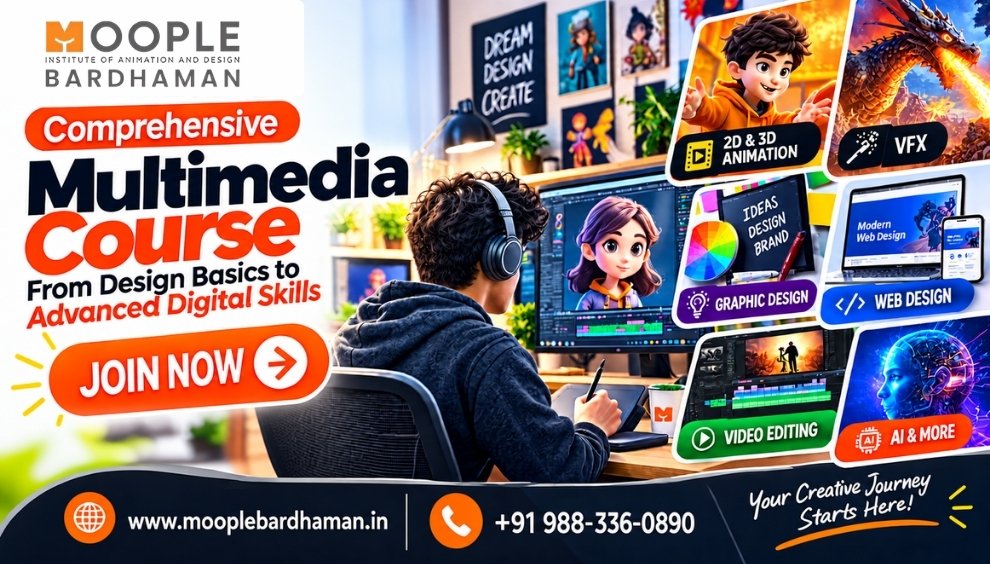


Multimedia Course Curriculum: From Design Basics to Advanced Digital Skills
The creative industry is constantly evolving, creating new opportunities for people interested in animation, visual effects, graphic design, web design, and digital content creation. A well-structured Multimedia Course Curriculum helps learners begin with design fundamentals and gradually develop advanced creative and technical skills.
For beginners and aspiring creative professionals, a Multimedia Course can provide exposure to different areas of digital production. From graphic design and animation to VFX, web design, motion graphics, and digital media, learners can explore how creativity and technology work together.
What Is a Multimedia Course?
A multimedia course is a structured program that teaches learners to create and communicate ideas through different forms of digital media. It can include graphics, animation, video, visual effects, websites, illustrations, and other digital content.
Unlike a course focused on only one discipline, a multimedia program introduces learners to multiple creative fields. This broader approach can help students understand different digital production workflows and discover areas they may want to specialise in.
For learners exploring a Multimedia Course in Bardhaman, factors such as curriculum, practical projects, software exposure, and learning approach can be considered when selecting a suitable program.
Multimedia Course Curriculum: What Do You Learn?
A good Multimedia Course Curriculum generally progresses from basic design concepts to specialised digital production techniques. The exact syllabus can vary between institutes, but a comprehensive course may cover several important areas.
1. Design Fundamentals
Design fundamentals form the foundation of digital creativity. Before moving into advanced software and production techniques, learners need to understand how visual elements work together.
Important concepts can include:
- Colour theory
- Typography
- Composition
- Balance and contrast
- Visual hierarchy
- Shapes and forms
- Layout principles
- Basic illustration
- Creative thinking
These concepts help learners make purposeful visual decisions and provide a foundation for graphic design, animation, VFX, and UI/UX.
2. Graphic Design
Graphic design focuses on communicating ideas through visual elements. It is an important part of multimedia education and can be applied to digital and print content.
A Graphic Design Course may cover:
- Poster and advertisement design
- Social media creatives
- Branding concepts
- Image editing
- Layout design
- Typography
- Illustration
- Digital compositions
For learners considering a Graphic Design Course in Bardhaman, practical projects can help them apply design principles while developing their visual communication skills.
3. 2D Animation
2D animation focuses on creating movement in a two-dimensional environment. It combines drawing, storytelling, timing, movement, and digital production techniques.
Topics may include:
- Principles of animation
- Character design
- Storyboarding
- Keyframes
- Timing and spacing
- Character movement
- Scene composition
- Digital animation workflows
A 2D Animation Course can help learners understand how static artwork can be transformed into engaging animated sequences.
4. 3D Animation
3D animation introduces learners to creating and animating objects within a three-dimensional environment.
Depending on the course level, topics may include:
- 3D modelling
- Texturing
- Materials
- Lighting
- Rigging
- Character animation
- Camera setup
- Rendering
A 3D Animation Course in Bardhaman can be relevant for learners interested in animation, gaming, advertising, visualisation, and other areas of digital production.
Understanding the complete workflow helps learners see how a 3D concept develops from a model into a finished visual.
5. Visual Effects and VFX
Visual Effects, commonly called VFX, involves creating or modifying digital elements and combining them with footage or other visual assets.
A VFX Course in Bardhaman may introduce learners to:
- Compositing
- Green-screen techniques
- Rotoscoping
- Motion tracking
- Background replacement
- Visual effects creation
- Post-production workflows
VFX requires both creative thinking and technical precision because different visual elements must work together naturally in the final composition.
6. Motion Graphics
Motion graphics combine graphic design and animation to communicate information through movement.
Learners may work on:
- Animated typography
- Logo animation
- Titles
- Transitions
- Promotional graphics
- Social media motion content
- Short animated sequences
A Motion Graphics Course in Bardhaman can complement graphic design, video editing, advertising, and digital content creation skills.
7. Video Editing and Digital Content Creation
Video is widely used for social media, websites, advertising, education, entertainment, and digital marketing. Multimedia training can therefore introduce learners to fundamental video production and editing concepts.
Students may learn about:
- Video cutting and sequencing
- Transitions
- Audio integration
- Colour correction
- Storytelling
- Titles and graphics
- Digital video formats
Learners interested in a Video Editing Course in Bardhaman can develop an understanding of how footage, sound, graphics, and storytelling are combined into a finished production.
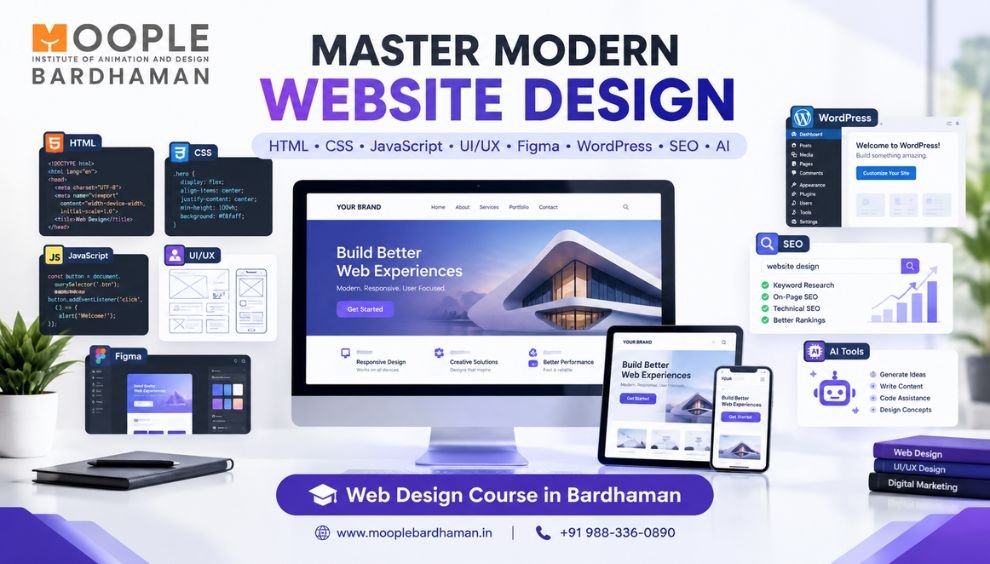
8. Web Design and UI/UX
Web design and UI/UX connect visual creativity with digital experiences. These skills can help learners understand how websites and interfaces are planned and presented.
A Web Design Course in Bardhaman may cover:
- Website layout
- User interface principles
- User experience concepts
- Responsive design
- Typography
- Visual hierarchy
- Basic web technologies
- Prototyping and design tools
Understanding UI/UX can help learners create digital experiences that are both visually appealing and easier to navigate.
How Does a Multimedia Course Progress from Basic to Advanced Skills?
The learning process generally becomes more specialised as learners gain confidence with foundational concepts.
A typical progression can be:
Design Fundamentals → Graphic Design → Animation → 3D & VFX → Motion Graphics → Digital Production → Portfolio Development
This progression allows learners to understand how creative concepts connect with technical execution.
For example, colour theory and composition learned at the beginning can later support graphic design, animation, motion graphics, VFX, and UI design.
This structured approach can make Multimedia Training in Bardhaman easier to follow for beginners developing their creative and technical abilities.
The Role of Software and Digital Tools
Software knowledge is an important part of modern multimedia education, but understanding the principles behind the tools is equally important.
Depending on the course, learners may work with tools related to:
- Graphic design
- Image editing
- Illustration
- Animation
- 3D modelling
- VFX
- Video editing
- Motion graphics
- UI/UX design
The exact software taught can vary according to the institution, course level, and curriculum.
Learning digital tools alongside creative fundamentals helps students understand both the technical process and the creative purpose behind their work.
How AI Is Influencing Multimedia Education
Artificial intelligence is becoming increasingly relevant to modern creative workflows. AI-powered tools can support brainstorming, image generation, editing, content preparation, and workflow automation.
For students pursuing a Multimedia Course, learning how AI can support creative processes can provide an additional digital skill. However, foundational knowledge remains important.
Design principles, storytelling, composition, animation, visual communication, and technical skills continue to provide the foundation for creating meaningful digital content.
Practical Projects and Portfolio Development
Practical projects allow learners to apply what they study and understand how creative workflows work in real assignments.
Projects may include:
- Posters and digital advertisements
- Brand identity concepts
- Illustrations
- Animated sequences
- 3D models
- VFX compositions
- Motion graphics
- Video editing projects
- Website interface concepts
A portfolio brings these projects together and can demonstrate a learner's creative and technical abilities. It can also help learners identify their strongest areas and decide which specialisation they want to pursue.
Skills You Can Develop Through Multimedia Training
A comprehensive Multimedia Training Course can help learners develop creative, technical, and professional skills.
Creative Skills
- Visual communication
- Concept development
- Storytelling
- Illustration
- Design thinking
Technical Skills
- Digital design
- Animation workflows
- Video editing
- VFX techniques
- 3D production
- UI/UX fundamentals
Professional Skills
- Creative problem-solving
- Project planning
- Presentation
- Portfolio development
- Working with creative briefs
Together, these skills can provide learners with a broader understanding of digital creative production.
Who Can Learn a Multimedia Course?
A multimedia program can be relevant to learners from different backgrounds, depending on the eligibility requirements of the particular course.
It may be suitable for:
- Students after Class 10 or 12
- Beginners interested in creative technology
- Aspiring graphic designers
- Animation enthusiasts
- Future VFX artists
- Content creators
- Web design learners
- Digital media enthusiasts
Individuals looking to expand their creative skills
Students do not necessarily need advanced design knowledge to begin a beginner-level program. A structured course can introduce concepts progressively, starting with the fundamentals.
Career Opportunities After Multimedia Training
Multimedia skills can be applied across several creative and digital fields. Depending on their specialisation, portfolio, skills, and experience, learners may explore roles such as:
- Graphic Designer
- 2D Animator
- 3D Artist
- VFX Artist
- Motion Graphics Designer
- Video Editor
- Multimedia Designer
- UI/UX Designer
- Digital Content Creator
Career requirements vary between organisations and roles. Developing practical skills, completing projects, and maintaining a strong portfolio can therefore be valuable parts of career preparation.
Multimedia Training at Moople Bardhaman
For learners looking for a Multimedia Institute in Bardhaman, Moople Bardhaman provides learning opportunities across creative and digital disciplines, including animation, VFX, graphic design, web design, and digital media.
Learners can explore different creative areas before developing deeper skills in the disciplines that interest them. Practical assignments and exposure to digital production workflows can help connect foundational knowledge with creative application.
Moople Bardhaman also offers courses in areas such as animation, VFX, graphic design, web design, and digital marketing, allowing learners to explore different pathways within the modern creative and digital ecosystem.
Create Your Future with Creativity
Discover new possibilities through multimedia, design, animation, and digital skills at Moople Bardhaman. Learn, create, and turn your imagination into skills that move with the digital world.
Your Ideas. Your Skills. Your Journey.
Frequently Asked Questions About Multimedia Courses
1. What is included in a multimedia course?
A multimedia course can include graphic design, animation, VFX, video editing, motion graphics, web design, UI/UX, digital content creation, and other creative technologies. The exact subjects depend on the course and institution.
2. Is a multimedia course suitable for beginners?
Yes. Many multimedia programs begin with fundamental concepts such as design principles, colour, typography, composition, and basic digital tools before progressing toward advanced subjects.
3. What subjects are taught in multimedia courses?
Common subjects can include graphic design, 2D animation, 3D animation, VFX, motion graphics, video editing, web design, UI/UX, illustration, and digital media production.
4. Can I learn animation and VFX through a multimedia course?
Yes. Depending on the syllabus, multimedia programs can introduce learners to both animation and VFX, including areas such as 2D animation, 3D workflows, compositing, motion tracking, and visual effects.
5. What skills can I develop through multimedia training?
Learners can develop visual communication, design thinking, animation, graphic design, video editing, VFX, 3D, digital production, creative problem-solving, and portfolio development skills.
6. What can I do after completing a multimedia course?
Depending on your specialisation and portfolio, you can explore creative roles such as graphic designer, animator, VFX artist, 3D artist, motion graphics designer, video editor, multimedia designer, or UI/UX designer.
7. Why is practical training important in multimedia?
Practical training allows learners to apply theoretical concepts to real projects. It can help them understand creative workflows, improve technical skills, receive feedback, and develop portfolio-ready work.