


Free Learning vs Guided Learning: The Real Difference
The internet promises everything for free—skills, tutorials, shortcuts, even careers. But does free learning truly build professionals, or just collectors of unfinished lessons?
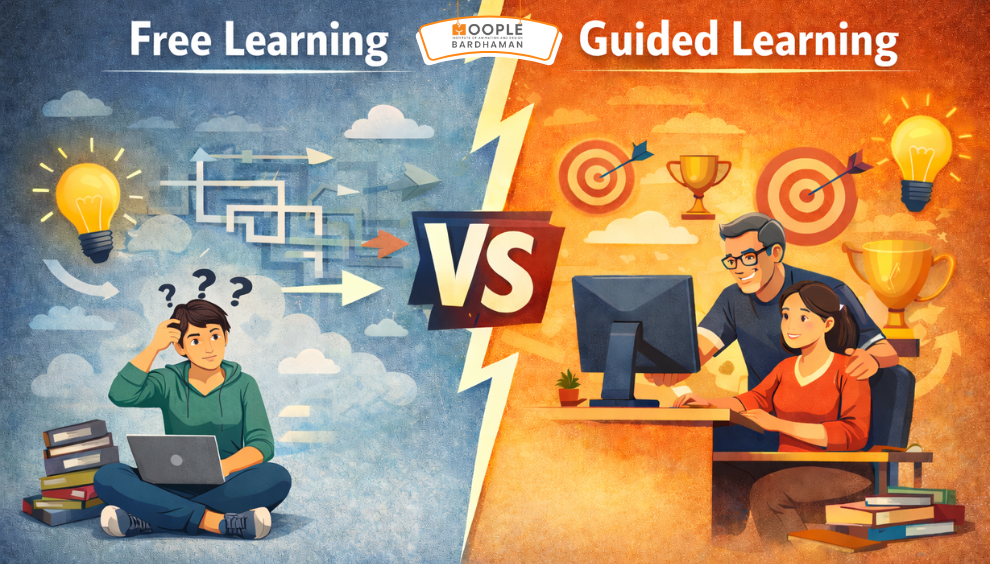
In today’s digital-first world, learning opportunities are everywhere. YouTube videos, free courses, blogs, and social media tips flood our screens daily. At the same time, guided learning through professional institutes continues to grow in demand. This raises an important question for every aspiring creative: Is free learning enough, or does guided learning make the real difference?
Let’s break it down honestly.
The Allure of Free Learning
Free learning platforms are attractive—and for good reason. They offer flexibility, zero cost, and easy access. Anyone can start learning graphic design, animation, web design, or digital marketing with just an internet connection.
Free learning helps you:
- Explore interests without commitment
- Understand basic concepts
- Learn at your own pace
- Experiment before choosing a career path
For beginners, free resources can be a great starting point. They spark curiosity and introduce tools and terminology. However, this approach comes with hidden challenges.
The Hidden Gaps in Free Learning
While free learning looks empowering, it often lacks structure, depth, and direction. Most learners face issues such as:
- No clear learning roadmap
- Inconsistent or outdated content
- No expert feedback
- No accountability
- No portfolio guidance
- No career or placement support
Many learners start enthusiastically but quit halfway because they feel lost or overwhelmed. Knowing what to learn is easy; knowing what to learn next is where free learning fails.
What Is Guided Learning?
Guided learning offers a structured, mentor-led approach where students learn step by step under professional supervision. It combines theory, practice, feedback, and career preparation into one focused journey.
Institutes like Moople animation and Design institute Bardhaman provide guided learning environments where creativity meets discipline. Instead of random tutorials, students follow a planned curriculum designed around industry needs.
Why Guided Learning Creates Professionals
The biggest advantage of guided learning is clarity. You don’t just learn—you progress with purpose.
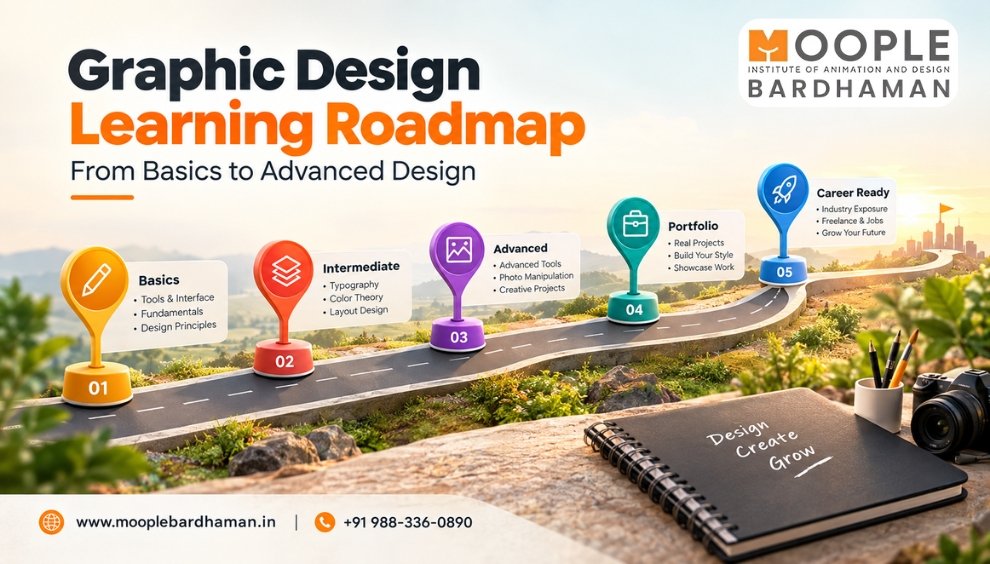
1. Structured Curriculum
Guided programs follow a logical sequence, from fundamentals to advanced concepts. This ensures strong foundations and avoids confusion.
2. Expert Mentorship
Learning from industry professionals helps students understand real-world expectations, mistakes to avoid, and best practices to follow.
3. Hands-On Projects
Guided learning focuses heavily on practical assignments and live projects, helping students build real skills—not just theoretical knowledge.
4. Continuous Feedback
Regular reviews improve quality, sharpen creativity, and help learners grow faster.
5. Portfolio & Career Support
A professional portfolio is essential in creative careers. Guided learning ensures students graduate with job-ready work samples and confidence.
Free Learning vs Guided Learning: A Clear Comparison
| Aspect | Free Learning | Guided Learning |
| Structure | Unplanned | Well-organized |
| Mentorship | None | Industry experts |
| Feedback | Self-evaluation | Professional review |
| Portfolio | Uncertain | Strong & guided |
| Career Support | No | Yes |
| Completion Rate | Low | High |
Free learning teaches bits of knowledge. Guided learning builds complete professionals.
Creative Careers Demand More Than Information
In fields like animation, graphic design, web design, and digital marketing, success depends on execution—not just knowledge. Employers and clients care about:
- Your portfolio
- Your problem-solving ability
- Your confidence with tools
- Your understanding of workflows
This is why guided learning environments, such as those offered by Moople animation and Design institute Bardhaman, play a crucial role in shaping career-ready creatives.
Can Free Learning and Guided Learning Coexist?
Absolutely. Free learning works best as a support tool—for revision, inspiration, and exploration. Guided learning should be the foundation.
The smartest learners use free resources to complement structured training, not replace it.
Conclusion
Free learning opens the door, but guided learning shows the path. While the internet provides endless information, it cannot replace mentorship, structure, feedback, and career guidance. For those serious about building a creative career, guided learning offers clarity, confidence, and completion.
In the end, the real difference isn’t about cost—it’s about direction. And the right guidance can turn talent into a profession.